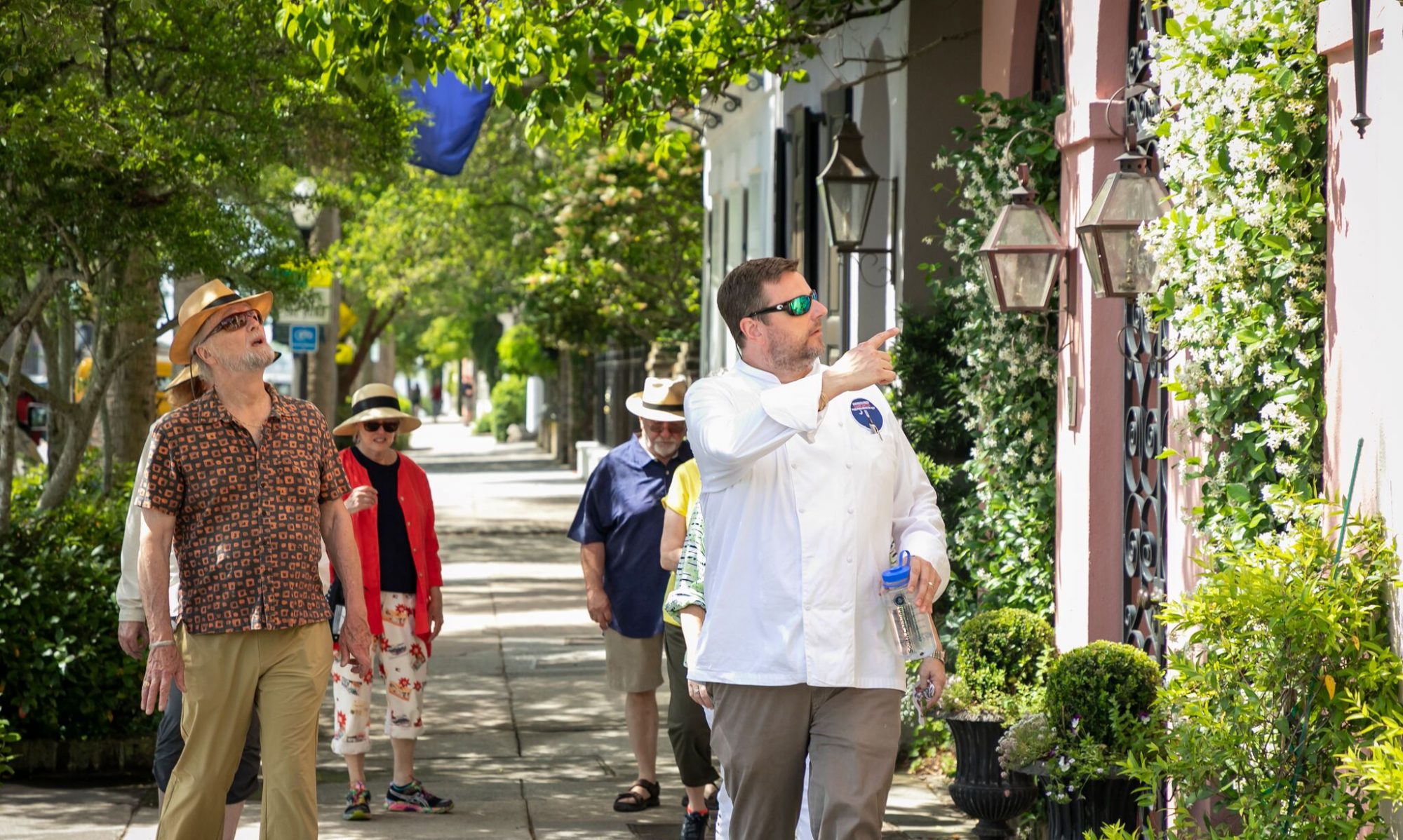


Walk down Prioleau Street today, and you’ll hear the sound of progress—the whine of drills and the clatter of crews as the historic warehouse at the corner undergoes its latest restoration. Most passersby see a construction site; I see ghosts and remember a legend.
Before the scaffolding, this building was the beating heart of Charleston’s culinary awakening—The Colony House. I’ve found inspiration here before. For those of us who spent years in Charleston’s professional kitchens, the name alone carries the weight of an anchor. I spent formative years working first with the legendary Louis Osteen, then for Frank Lee at the Old Village Post House—a sister restaurant to Slightly North of Broad (SNOB). Understanding the lineage of those kitchens starts right here, on Prioleau Street.
The French Quarter: Where Charleston’s Modern Food Scene Was Born
The Steakhouse That Started It All


In 1952, Bill Snipes opened a lounge and buffet inside the Sergeant Jasper Apartments. By 1953, he was reportedly selling more steaks than anyone else in town. He expanded the restaurant with additional dining space. But Snipes had bigger ambitions; he wanted to stage an experience. After a citywide contest, he christened the space The Flag Room. By 1959, he moved the operation to 4 Vendue Range, transforming the restaurant into a theatrical destination that celebrated Charleston’s past with themed rooms like “The Flag Room” and “The Room of the Seven Lords Proprietors.” The Colony House was born.


Samuel Prioleau and the Merchant Waterfront

The restaurant’s most ambitious chapter unfolded on Prioleau Street, named for the prominent merchant Samuel Prioleau. The district was once the city’s maritime engine—a place of rice, indigo, and coffee. In 1785, this dirt sold for 2,125 pounds Sterling. After the 1886 earthquake “practically destroyed” the waterfront, a warehouse rose from the rubble, built on the original foundations with old bricks. Snipes dropped $500,000—a king’s ransom in the ’60s—to transform that 19th-century coffee warehouse into an 18,000-square-foot temple of gastronomy.

The European Backbone

In 1976, Snipes sold the establishment to Franz Meier, Chris Weihs, and Harry Waddington. This trio turned the restaurant into a continental cuisine destination. As Kathy Britzius, director of the Greater Charleston Restaurant Association, noted, this ownership change marked the genesis of what she calls the “European backbone” of Charleston dining. While the nearby restaurant Perdita’s already held a national reputation, this new era of The Colony House would turn haute cuisine in Charleston on its head.
The Wine Cellar: Charleston’s First Tasting Menu

In 1977, the owners converted an underused lunchroom—once described as “the ugliest room in America”—into The Wine Cellar. It was a hidden European wine cave, where Chef Roland Henin introduced authentic French cuisine. In those early days, menus weren’t printed; the maître d’ recited daily offerings based on what was freshest. It was Charleston’s first true chef’s tasting experience—raw, fresh, and uncompromising.
The Frank Lee & Louis Osteen Connection
The final chapter of this institution began in 1989, when Dick Elliott purchased the restaurant. Elliott’s path was paved by industry titans; as he recounted to Eater, it was the legendary Louis Osteen who urged him to buy The Colony House and, crucially, to hire Frank Lee.

Lee, a pioneer of locally sourced, fresh ingredients, eventually became available in 1992. By 1993, the era of massive, formal restaurants like The Colony House was fading. The closure of the institution on November 28, 1993, opened the door for Frank Lee and Dick Elliott to open Slightly North of Broad (SNOB). Having worked alongside Frank Lee at the Old Village Post House, I can attest that the precision and respect for ingredients he championed there are a direct evolution of the standards set during these formative years.
Why It Still Matters
The Colony House proved that Charleston could support serious, ambitious restaurants. It introduced the city to European-influenced cuisine, wine-driven dining, and the beauty of adaptive reuse. It is our culinary DNA.
⸻
Taste the History
At Undiscovered Charleston, we don’t just eat—we excavate. We explore the forgotten kitchens, historic buildings, and bold personalities who transformed a sleepy Southern port into one of the world’s great food cities.
Ready to walk the same streets where Charleston’s dining culture was born?
👉 Book your Undiscovered Charleston Food Tour today. Explore Charleston’s historic flavors and taste the legacy that started it all!

2 Replies to “The Ghosts of Charleston’s Restaurants Past: The Colony House”