

In the humid, salt-crusted twilight of 1970s Charleston, Chef Serge Claire understood a fundamental truth: the most beautiful things are built on ruins. At 235 Meeting Street, he transformed a derelict shell into Restaurant Marianne—one of the most important French kitchens in Charleston history—and in doing so, gave the city a dish that still echoes today: a deeply disciplined French onion soup built not on excess, but on precision.
Claire refined his metier in that scarred brick husk—a place burdened by gambling debts and long memory—he performed resurrection. Beneath the structure, he reclaimed an 18th-century cistern and turned it into a subterranean sanctuary of forgotten vintages.. What had been a void became a heartbeat. What had been buried began to breathe.
The kitchen followed suit.
On those rare Charleston nights when the humidity breaks and the wind cuts clean off the Cooper River, Marianne’s French onion soup became a kind of ritual. While lesser kitchens masked weak stock with salt, Claire’s brigade worked with restraint—layering flavor, coaxing sweetness from onions, and building depth the long way.
But the true mastery—the lightning bolt—was the raft.
By double-toasting baguette with clarified butter and Parmesan before the Swiss cheese ever touched it, they engineered a structural miracle: a crouton that holds, a surface that resists collapse, a foundation strong enough to carry the molten weight of the dish. Not garnish—architecture.
Marianne’s French Onion Soup (Charleston, SC) — Serves 6
Adapted from Restaurant Marianne via The Post and Courier
This Charleston French onion soup recipe reflects the disciplined French technique that defined Restaurant Marianne. The defining move is the reinforced “raft”—a double-toasted baguette with clarified butter and Parmesan—designed to hold structure under heat and keep the cheese perfectly suspended. It’s a small detail, but it separates a good soup from a great one.
Yield: ~1½ quarts (6 servings)
Time: 45 minutes
Ingredients
For the soup
• 1 tablespoon unsalted butter
• 3 large onions, halved and sliced ¼-inch thick
• ¾ cup dry white wine (such as Chablis)
• 36 ounces (4½ cups) low-sodium beef broth
• 12 ounces (1½ cups) low-sodium chicken broth
• ⅜ teaspoon dried thyme
• 1 to 2 small bay leaves
• Fine sea salt and freshly ground black pepper
For the croutons and assembly
• 1½ French baguettes, sliced ½-inch thick
• Clarified butter, for brushing
• Shredded Parmesan cheese
• 9–12 slices imported Swiss cheese (such as Finlandia)
Preparation
Step 1
In a heavy pot or Dutch oven, melt the butter over medium-high heat. Add the onions and cook, stirring occasionally, until softened and lightly caramelized—coaxing sweetness from the raw edge of the ingredient. Take your time here; depth is built, not rushed.
Step 2
Add the white wine, beef broth, chicken broth, thyme, and bay leaf. Bring to a boil, then reduce to a steady simmer. Cook uncovered for 15–20 minutes, allowing the broth to deepen and unify.
Step 3
Prepare the “raft”: Heat the broiler. Arrange baguette slices on a baking sheet and toast until golden on one side. Flip, brush generously with clarified butter, and top with Parmesan. Return to the broiler until crisp and deeply browned.
Step 4
Remove the bay leaf. Taste and adjust seasoning with salt and pepper. Keep warm over low heat.
Step 5
Ladle soup into oven-safe crocks, filling nearly to the rim. Place one prepared crouton on top of each. Layer 2–3 slices of Swiss cheese over the bread, allowing it to overlap the rim slightly for structure.
Step 6
Broil until the cheese is melted, bubbling, and blistered to a deep golden brown. Serve immediately—while the structure holds and the soup is alive.
A Lineage Written in Brick and Fire
The revolution Claire ignited at Restaurant Marianne did not emerge in isolation. Its roots trace back through the French influence of Perdita’s and forward into the refinement and scale of The Colony House—forming a quiet but powerful lineage that reshaped how Charleston eats.
In this city, nothing is ever truly lost. It is buried, absorbed, and—if you know where to look—resurrected.
Walk the Streets. Learn the Technique. Taste the History.
The story of Charleston’s food isn’t told in dining rooms alone—it’s written into the streets, the buildings, and the kitchens hidden just out of sight.
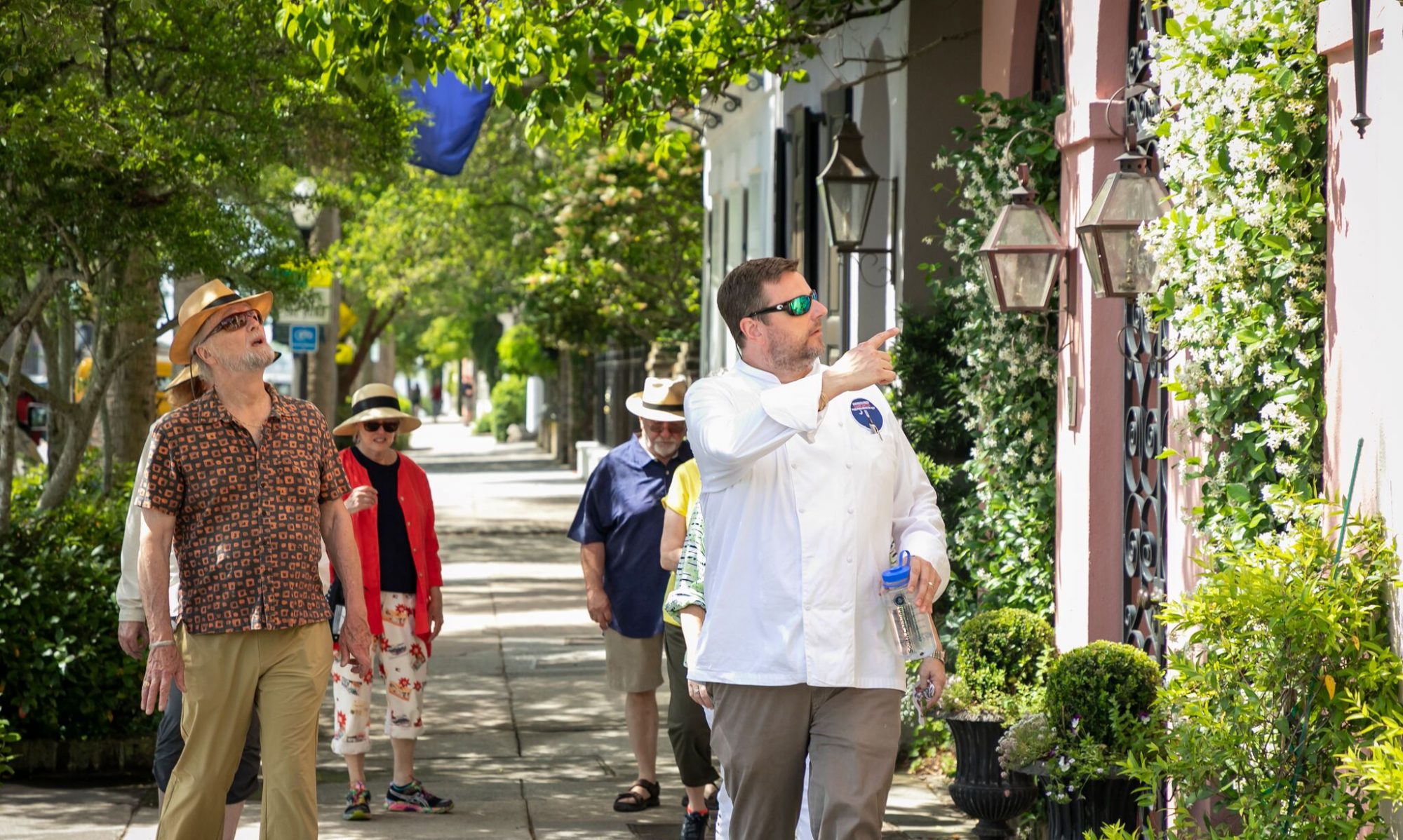
On our chef-led Charleston food tour and cooking class experience, you don’t just hear these stories—you taste them.
• Walk the historic streets where this culinary evolution began
• Experience live French technique in an intimate cooking demonstration
• Sit down to a wine-paired Lowcountry meal shaped by this history
If you’re searching for the best Charleston food tour or a hands-on Charleston cooking class, this is where history becomes dinner.
Book your Undiscovered Charleston experience directly and take your seat at the table.
Charleston Food History FAQ
What made Restaurant Marianne important in Charleston?
It helped introduce disciplined French technique and elevated fine dining standards during a pivotal moment in the city’s culinary evolution.
What is the secret to great French onion soup?
Properly caramelized onions, balanced stock, and a structurally sound crouton that holds under melted cheese.
Can you learn these techniques in Charleston?
Yes—chef-led food tours and cooking classes offer hands-on access to the techniques and history behind these dishes.