

The Secret History of the Cellar in the Cistern.
In the humid, salt-crusted twilight of 1970s Charleston, Meeting Street was no postcard. It was a landscape of heavy silence and crumbling brick that felt more like a scene from Poe than a travel brochure. Long before the city found its polish, it was a reliquary of subterranean secrets. And beneath one ruined building at 233 Meeting Street lay a forgotten cistern that would become the most unusual wine cellar in the American South, a restaurant named Marianne.

The revolution began in the shadow of an ancient monolith. Before Serge Claire was the dean of Meeting Street, he was a disciple at La Pyramide in Vienne. The restaurant took its name from the Plan de l’Aiguille, a towering Roman limestone pyramid that stood as a lonely sentry over a long-vanished circus. It was there, under the legendary Fernand Point—the three-star master who shaped the souls of Bocuse and the Troisgros brothers—that Serge learned that a chef doesn’t just cook; he breathes life into the inanimate.
Restaurant Marianne: Charleston’s Late-Night French Dining Legend
Restaurant Marianne, founded by French-trained chef Serge Claire, was one of Charleston’s most celebrated fine-dining restaurants from the late 1970s through the mid-1990s. Located at 233–235 Meeting Street in downtown Charleston, the restaurant became famous for its classic French cuisine, dramatic tableside service, and a wine cellar built inside an 18th-century brick cistern beneath the building. For nearly two decades, Marianne was a favorite gathering place for the Spoleto Festival crowd, visiting artists, and Charleston’s culinary elite, helping shape the city’s modern restaurant scene.
Birth of a Restaurant

Serge first established his foothold at 219 Meeting Street. It was an intimate sanctuary that immediately ignited a culinary insurrection. By March 1981, word had traveled north. Ethelie Vare, writing for the Charlotte Observer, captured the magic of that original location as a magical portal:
“The exterior is so plain you could walk right past it, but inside, Marianne is a touch of Paris in old Charleston… where the scent of garlic and wine fills the air, and the service is as polished as the silver.”
But by the early eighties, the city was thinking bigger. The blueprints for Charleston Place were being unrolled—a massive vision designed to anchor the city’s revitalization and turn a once-faded stretch of downtown into a premier destination. As the landscape shifted to accommodate this new era of polished marble, Serge’s original footprint at 219 was destined to become part of the city’s grandest hotel. But Serge’s vision would not be diminished; it would be reborn.
The Modern Prometheus on Meeting Street

He retreated just doors away to the corner of Hasell Street, to a site that was, by all accounts, a corpse. 233-235 Meeting Street was a derelict shell, a labyrinth of scarred brick that had seen the worst of the city’s vices—gambling debts, the “notorious” Lion Head bar, the whispers of a forgotten sisterhood, even a rumored headquarters to the KKK. To any other restaurateur, it was a ruin. To Serge, it was a body waiting for a soul.
In this laboratory, Serge and Kerstin Claire performed a Promethean rebirth. Serge didn’t just hire a contractor; he was in the dust himself, cleaning 1890s bricks by hand and reclaiming wide-plank pine and tin ceilings from the city’s bones.
The true mastery lay beneath the floorboards. Serge reached into the hollows of the earth and reclaimed the building’s original 18th-century cistern. Where the city saw a hole to be filled with dirt, Serge saw a heart. He transformed this subterranean brick vault into a wine cellar—a dark, cool womb for the most storied vintages of France. As one regular guest famously recalled, “You felt like you were dining on top of Charleston’s secrets, with the best Bordeaux in the world resting just beneath your feet.”
The Midnight Revolution
Serge’s arrival wasn’t merely a fluke of geography; it was the continuation of a long-standing Charleston love affair with the Continent. Long before the first cork was pulled at Marianne, the city’s culinary soul was being shaped by the Gallic shadows of Perdita’s. If Marianne was the fiery, late-night revolution, Perdita’s was the elegant foundation—the place that first taught the Holy City the language of butter, wine, and white-tablecloth discipline.
At Marianne, the revolution was reanimated by the glow of flambé. Tuxedoed waiters performed a silent, choreographed dance, deboning Dover Sole or igniting Steaks au Poivre Vert with enough cognac to momentarily banish the shadows. The menu was a map of classic French indulgence: Escargots Bourguignonne, Veau Oscar, and the mysterious Potage Bagration.
While the rest of the city rolled up its sidewalks by 9:00 PM, the “Rue Meeting” stayed alive. It was the unofficial clubhouse for the Spoleto crowd, where you could sit down at midnight for a perfect Omelette aux Fines Herbes and feel the pulse of a city that had finally been shocked back to life.
Marianne closed in 1995, but the cellar in the cistern remains one of the most unusual chapters in Charleston restaurant history, a hidden chamber beneath Meeting Street where one chef turned Charleston’s buried past into the foundation of its modern dining scene. It’s a testament to Serge Claire—the man who knew that in Charleston, the past won’t stay buried for long.
Descend into the History of the Holy City
The revolution Serge Claire started beneath a Phrygian cap hasn’t stopped; it has only evolved. In Charleston, every meal is a conversation with the past, and every kitchen holds a secret.
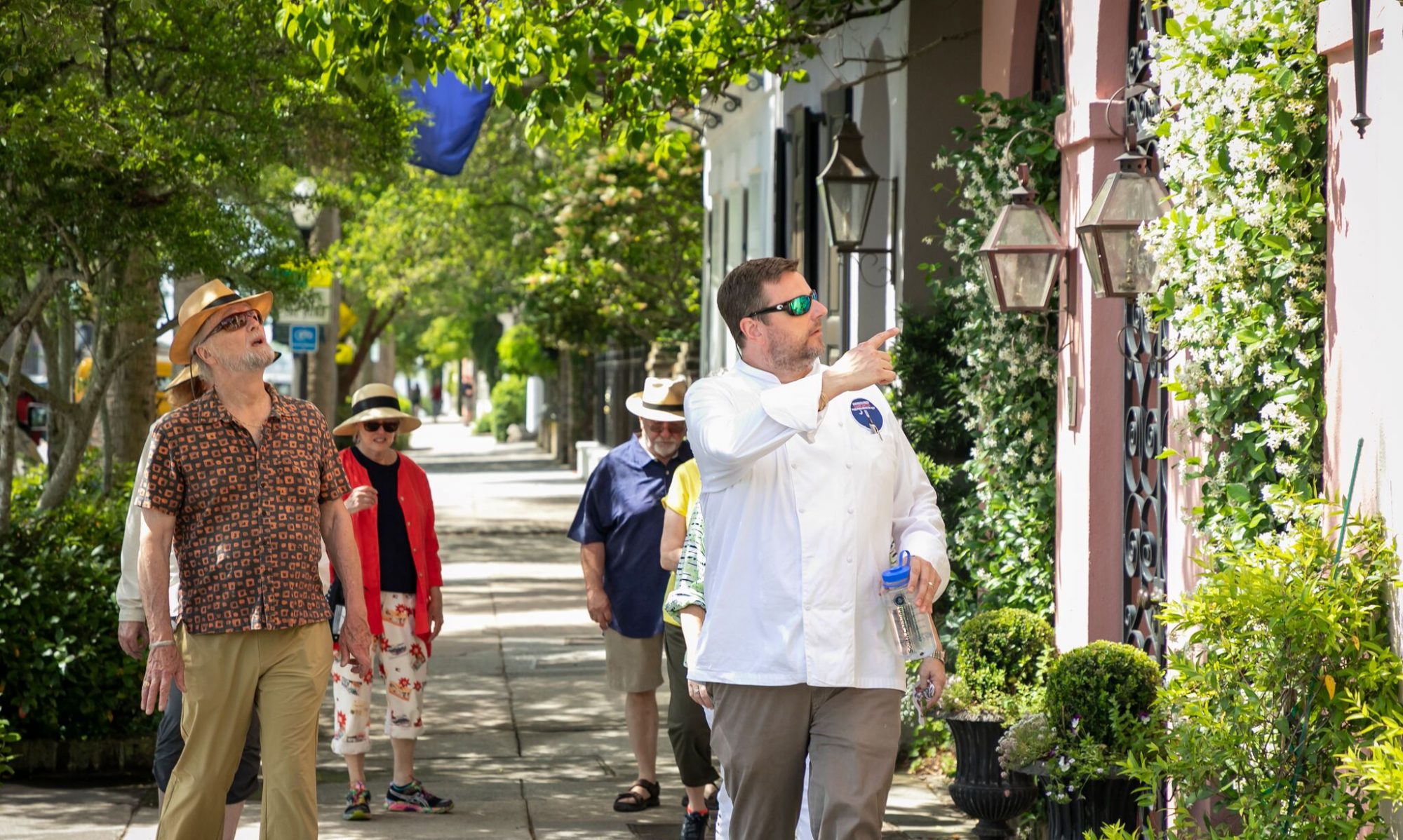
Ready to witness the resurrection? Whether you are looking to master the techniques of a French-trained chef in an intimate cooking class or walk the streets where the culinary revolution began on a private food tour, the table is set.
[Book Your Exclusive Charleston Food Tour or Private Cooking Class Here]

One Reply to “”