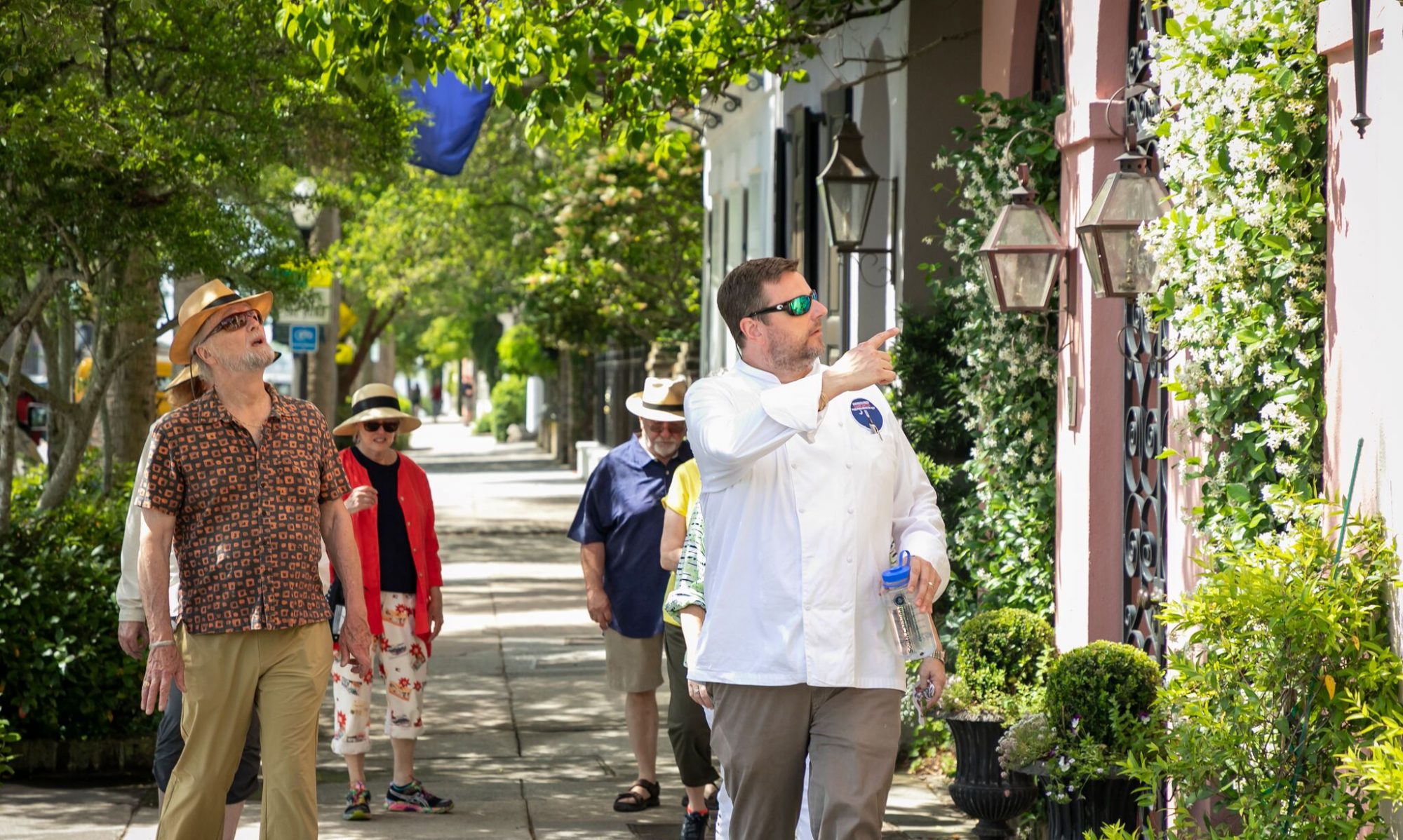
Master the "Velvet Season" with Chef Forrest Parker. This guide marries Gullah Geechee "deb’l" stuffing with the Edisto Motel’s "shatter-crunch." Learn the professional secrets to stuffing and sautéing Charleston’s most fleeting seasonal prize.
The Secret of the Velvet Season: C.C. Leslie and the History of the Charleston Soft Shell
In the Lowcountry, spring doesn’t arrive on a calendar; it arrives when the blue crab sheds its armor and the docks whisper that soft shell season has begun. Travelers searching for an authentic Charleston food tour or a historic Charleston cooking class often encounter these briny delicacies without realizing they owe their place on the …
Henry’s Flounder à la Gherardi: A Mid-Century Charleston Masterpiece
Adapted by Chef Forrest Parker, from Molly Heady Sillers Our version at Revival, TripAdvisor's #1 Fine Dining Restaurant in North America 2026, included lobster. "Henry's was the much more famous palace of cuisine and was much more central to the evolution of restaurant dining in Charleston." Dr. David S. Shields In the mid-20th century, when …
Continue reading "Henry’s Flounder à la Gherardi: A Mid-Century Charleston Masterpiece"
The Secret of the Silver Spoon: Refining Henry’s
If you scroll through Instagram, you’ll see the modern face of Henry's on the Market: a rooftop patio, live music, and the relaxed confidence of a long-lived address. The captions often describe it as the “oldest continuously operating restaurant in Charleston,” dating to 1932. But the story of 54 Market Street begins decades earlier. By …
Continue reading "The Secret of the Silver Spoon: Refining Henry’s"
Resurrecting Marianne’s French Onion Soup in Charleston
In the humid, salt-crusted twilight of 1970s Charleston, Chef Serge Claire understood a fundamental truth: the most beautiful things are built on ruins. At 235 Meeting Street, he transformed a derelict shell into Restaurant Marianne—one of the most important French kitchens in Charleston history—and in doing so, gave the city a dish that still echoes …
Continue reading "Resurrecting Marianne’s French Onion Soup in Charleston"
The Cellar in the Cistern: The Southern Gothic History of Restaurant Marianne in Charleston
In the humid, salt-crusted twilight of 1970s Charleston, Meeting Street was no postcard. It was a landscape of heavy silence and crumbling brick that felt more like a scene from Poe than a travel brochure. Long before the city found its polish, it was a reliquary of subterranean secrets. And beneath one ruined building at …
Colony House Stuffed Pompano: A Classic Charleston Lowcountry Recipe
A French Quarter Culinary Tradition, adapted by Chef Forrest Parker The Pompano: A Coastal Inheritance There is a silver-scaled elegance to the Pompano that demands reverence—a quiet, salt-licked alchemy of the South Carolina Lowcountry. This buttery marriage of delicate fish and briny crabmeat stuffing carries the same DNA of refinement we explored in our historical …
Continue reading "Colony House Stuffed Pompano: A Classic Charleston Lowcountry Recipe"
Excavating Flavor: The Colony House and the Transformation of Charleston Dining
Explore the legacy of The Colony House with Chef Forrest Parker. Discover how this French Quarter icon transformed Charleston dining from 1785 to the birth of SNOB.
Perdita’s Baked Crab Meat Remick: A Historic French Quarter Recipe.
By Forrest Parker Vintage postcard displaying World Famous Perdita's, inside and out. This historic gratin served as the calling card for Perdita’s, the midcentury Charleston landmark at 10 Exchange St. that once shared a pedigree with the finest dining rooms in Paris. Unlike its more modern, heavy-handed cousins, this Remick is a study in balance. …
Continue reading "Perdita’s Baked Crab Meat Remick: A Historic French Quarter Recipe."
Ghosts in the Brick: The 300-Year Culinary Soul of 10 Exchange St
Charleston is a city that remembers through its bones—and few places hold more gravity than 10 Exchange St. From a muscular 18th-century warehouse to the legendary Perdita’s, discover the 300-year evolution of the Holy City’s most storied culinary landmark.

