

In the Lowcountry, spring doesn’t arrive on a calendar; it arrives when the blue crab sheds its armor and the docks whisper that soft shell season has begun. Travelers searching for an authentic Charleston food tour or a historic Charleston cooking class often encounter these briny delicacies without realizing they owe their place on the plate to a Reconstruction-era maritime pioneer: Charles C. Leslie.

We call this fleeting moment The Velvet Season. And behind it stands the quiet architect of Charleston’s seafood culture.
A “Danger Junkie” on the High Seas
Born into Charleston’s “brown elite” in 1841, Leslie was a child of tides and shifting sandbars. By his teens, he had become a “supreme pilot,” possessing an instinctive mental chart of Charleston Harbor’s treacherous shoals. When the Civil War erupted, Leslie leaned into the peril.
As a blockade runner, he used his maritime genius to guide ships through Federal patrols. In his 1910 reminiscences for the Charleston Sunday News, he described himself as a “danger junkie” with an “insatiable quest for trouble.” He famously recounted fleeing a sinking vessel while wearing a belt loaded with $31,000 in gold and silver, crawling “crab-like” along the ocean floor to reach the shore. It is a story equal parts myth and muscle memory—the kind that forms the backbone of Charleston legend.
The Architect of the Charleston Plate
Before the war, Charleston’s seafood economy was chaotic and dependent on Northern “smack fleets.” After 1865, Leslie saw opportunity where others saw ruin.
He organized the Mosquito Fleet—a network of small local boats manned by freedmen—shifting control of the seafood supply back to Charleston’s working waterfront. By strengthening local fisheries along the Cooper River, Leslie transformed seafood from a coastal necessity into the defining feature of Lowcountry cuisine.
Under his influence, the marriage of seafood and grain became Charleston’s culinary signature. Dishes like shrimp and grits, crab pilau, and Limping Susan reflect the agricultural expertise of the Gullah Geechee community and the maritime resources Leslie secured. What had once been “creek-bank food” became the foundation of the modern Charleston dining identity.
The Savant of Shem Creek
Leslie was more than a merchant; he was a lay scholar of marine biology. Corresponding with the Smithsonian and the U.S. National Museum, he supplied rare specimens from local waters, building relationships that allowed him to master tidal ecosystems.
Armed with this scientific knowledge, Leslie established the region’s first commercial soft-shell crab nursery on Shem Creek. By monitoring molting cycles and protecting vulnerable crabs in shoal ponds, he stabilized a delicacy previously limited to chance harvests. Soft shell crab shifted from a rarity to a seasonal ritual, allowing Charleston hotels and restaurants to reliably serve what Leslie called the “transitory luxury” of the soft shell.
A Legacy in Stone: 72 Anson Street
Leslie’s achievements carried immense social significance. At a time when racial barriers constrained opportunity, he emerged as a civic titan. A co-founder of St. Mark’s Episcopal Church and a leader of the Prince Hall Masons, Leslie invested heavily in Charleston’s Black professional class.
In 1904, he purchased the Kohne-Leslie House at 72 Anson Street, anchoring his legacy in the neighborhood now known as Ansonborough. When he died in 1911, two days after his 70th birthday, the city paused for a two-day funeral—a final tribute to the man who mastered both the harbor and the table.
Further reading:
The 1910 Reminiscences: First-person accounts of the blockade years and the $31,000 gold belt. S.C. Historical Society.
• The Smithsonian Specimens: Records of Leslie’s biological contributions to the National Museum of Natural History.
• Southern Provisions: The definitive text on Leslie’s culinary impact by Dr. David S. Shields.
• Here’s a fantastic post on Leslie by Historic Charleston Foundation archivist Shannon Duffy.
• The Soft Shell Inquiry: Leslie’s 1884 correspondence on crab nurseries in the U.S. Fish Commission Bulletin.
Want to dig deeper? Taste the History You Can Only Find Here
Each spring, as the first soft shell crabs reach the markets, Charleston quietly celebrates the legacy of those who built its foodways. At Undiscovered Charleston, we explore the stories behind the dishes—from the fisheries of Shem Creek to the historic streets of Ansonborough.
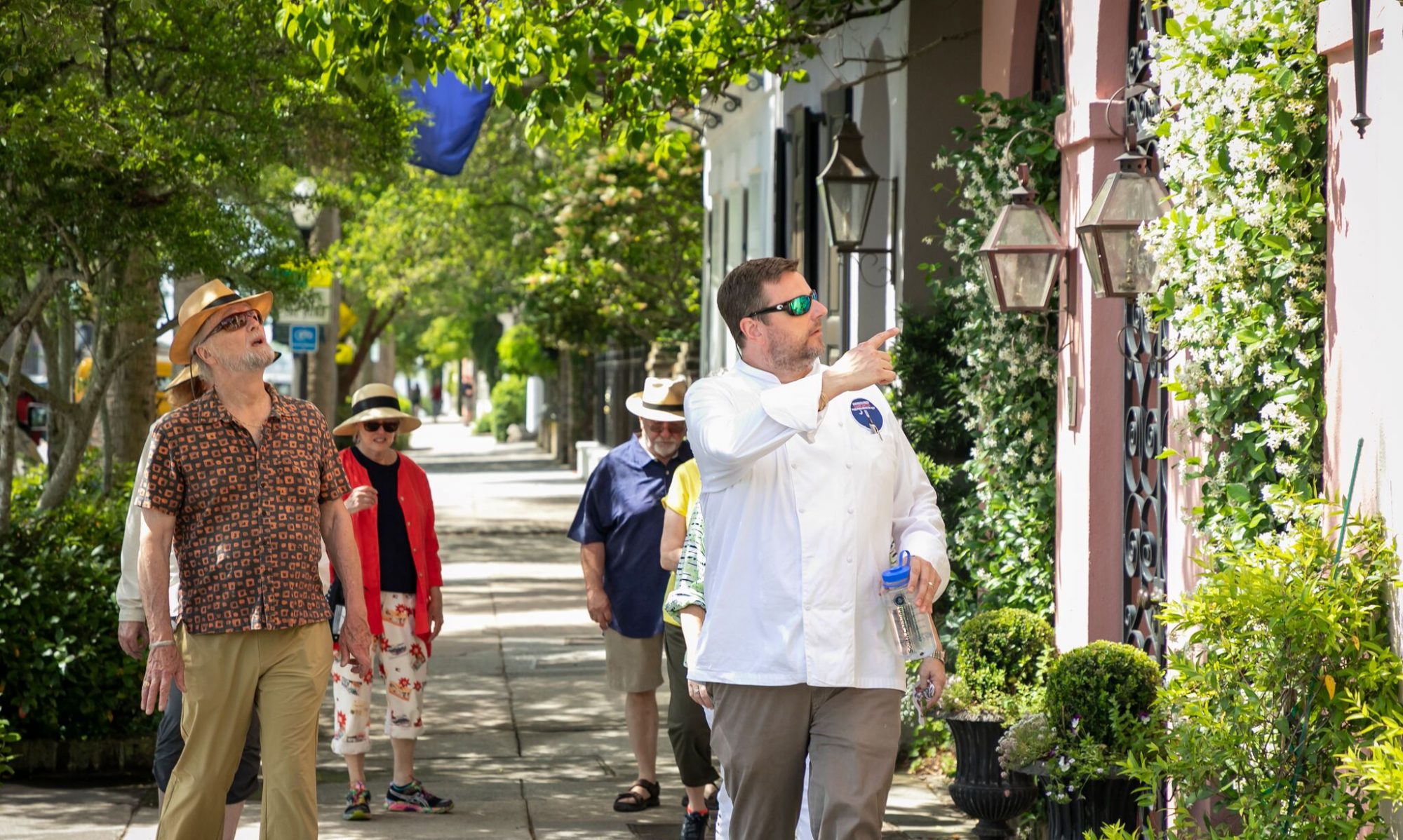
Join Chef Forrest Parker for a chef-led Charleston food experience that blends culinary history, storytelling, and a private cooking demonstration inspired by the ingredients that shaped the Lowcountry.

Soft shell season is fleeting—and so are our seats.
👉 [BOOK YOUR CHARLESTON FOOD TOUR & COOKING CLASS]
Discover the story behind Charleston’s most iconic flavors—one plate at a time.
2 Replies to “The Secret of the Velvet Season: C.C. Leslie and the History of the Charleston Soft Shell”